

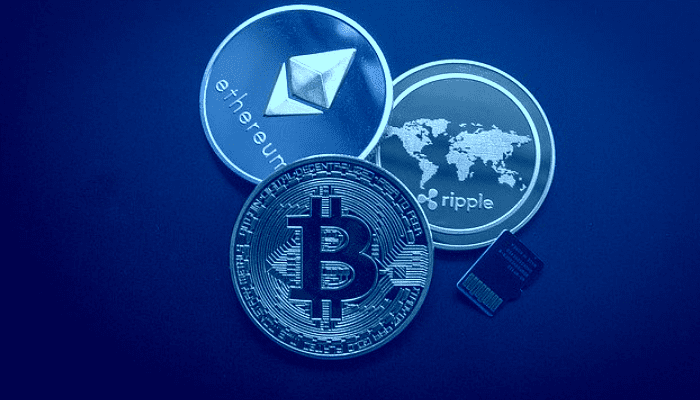
Blockchain technology has not emerged as a single, finished invention — it has evolved through distinct generations, each one expanding what the technology can do and who it can serve. Just as the internet passed through recognizable phases, from early wide-area networks in the 1960s to the launch of the World Wide Web in the 1990s and the first browsers and search engines that followed, blockchain has its own developmental arc. Understanding where it has been is essential to grasping where it is going.
Generation One: Bitcoin and the Birth of the Distributed Ledger
The first generation of blockchain begins with Bitcoin. Although the underlying ideas had been circulating in computer science communities for years, it was the pseudonymous developer Satoshi Nakamoto who brought them together in a coherent form through the Bitcoin white paper. That document outlined a shared public ledger — a blockchain — designed specifically to support a peer-to-peer digital currency network.
The architecture Nakamoto proposed was deliberate and constrained. Bitcoin transactions are recorded in blocks of 1 megabyte (MB), which are then linked together through a complex cryptographic verification process, forming an immutable chain. Once a block is confirmed and added to the chain, altering it would require rewriting every subsequent block — a computational task that makes fraud practically impossible under normal network conditions.
What is striking about first-generation blockchain is its durability. Bitcoin’s underlying blockchain has remained largely unchanged from those earliest designs. The core features Nakamoto established — decentralization, transparency, immutability, and cryptographic security — are still the foundational principles every subsequent blockchain has built upon or attempted to improve.
What First-Generation Blockchain Got Right
The genius of the first generation was not just technical — it was philosophical. By removing the need for a central authority to validate transactions, Bitcoin demonstrated that trustless coordination between strangers at scale was possible. That proof of concept, however narrow its original application, opened a door that could not be closed.
Generation Two: Ethereum and the Rise of Smart Contracts
As developers and entrepreneurs studied Bitcoin’s architecture, a natural question emerged: if a blockchain can reliably record financial transactions, why can’t it record and enforce other kinds of agreements? That question gave rise to the second generation of blockchain, most prominently represented by Ethereum.
Ethereum’s founders proposed that assets and trust agreements of all kinds could benefit from blockchain management, not just currency transfers. The vehicle for that expansion was the smart contract — a self-executing agreement coded directly onto the blockchain. Rather than relying on lawyers, banks, or other intermediaries to oversee the fulfillment of a contract, a smart contract triggers automatically when predefined conditions are met. Those conditions might include the passing of an expiration date, the achievement of a specific asset price, or the confirmation of a delivery.
Once triggered, the smart contract executes without input from any outside party. The implications are significant. Processes that once required weeks of paperwork, legal oversight, and manual verification can, in theory, be compressed into seconds of automated execution on a distributed network.
How Far Smart Contracts Have Actually Come
It is worth being precise about where smart contracts stand today. The technology has found genuine traction in areas such as decentralized finance (DeFi), non-fungible tokens (NFTs), and supply chain verification. But the full potential of smart contracts — particularly in complex legal and commercial contexts — remains largely unrealized. Programming errors, oracle problems (the challenge of reliably feeding real-world data into a blockchain), and regulatory uncertainty have all slowed mainstream adoption. Whether the industry has truly moved past the second generation, or is still working through it, remains a legitimate debate among technologists.
Generation Three: Scaling and the Road Ahead
The most pressing challenge facing blockchain technology as it moves into its third phase is scalability. Bitcoin, for all its resilience, has long been troubled by slow transaction processing times and network bottlenecks. When transaction volume spikes, fees rise and confirmation times lengthen — a problem that becomes more acute as adoption grows. Numerous newer digital currencies and blockchain platforms have attempted to address these limitations through architectural revisions, but results have been mixed and no universally accepted solution has emerged.
Scalability is not merely a technical inconvenience — it is the primary barrier between blockchain as a niche financial infrastructure and blockchain as a global-scale technology. A payment network that processes seven transactions per second, as Bitcoin does under base-layer conditions, cannot compete with Visa’s capacity of tens of thousands of transactions per second without significant engineering advances at the protocol or layer-two level.
Beyond scaling, new applications of blockchain continue to surface across industries including healthcare records, digital identity verification, voting systems, and intellectual property management. Whether these applications mature into widespread use will depend on solving not just technical problems but also regulatory and interoperability challenges that no single blockchain project can resolve alone.
Why This Matters
Framing blockchain’s history in generational terms is more than an academic exercise. It clarifies something important: blockchain is not a finished product. Each generation has addressed limitations the previous one could not foresee, and the third generation is still being written. Investors, developers, and enterprises making decisions about blockchain today are effectively placing bets on which scaling approaches, smart contract platforms, and use cases will define the technology’s next chapter.
The generational framework also reframes the familiar criticism that blockchain has failed to deliver on its promises. That argument treats blockchain as a static technology against a fixed standard. A more accurate lens recognizes that the technology is mid-evolution — closer to the internet of the mid-1990s than the internet of today. The infrastructure that eventually enabled streaming video, cloud computing, and the app economy was largely invisible and unappreciated at the time. Blockchain’s third generation may be building something similarly foundational.
Key Takeaways
- Generation one established the template. Satoshi Nakamoto’s Bitcoin white paper introduced the core blockchain model — 1MB blocks, cryptographic linking, and a shared public ledger — that all subsequent blockchains have referenced or reworked.
- Smart contracts define the second generation. Ethereum expanded blockchain’s utility beyond currency by enabling self-executing contracts triggered by predefined conditions, removing the need for intermediaries in a wide range of agreements.
- Scalability is the defining challenge of generation three. Bitcoin’s transaction throughput limitations are not just a Bitcoin problem — they represent a systemic constraint that the entire industry must solve before blockchain can operate at global infrastructure scale.
- The second generation may not yet be complete. The full potential of smart contracts in commercial and legal contexts remains largely untapped, meaning generations two and three are, to some degree, running in parallel.
- Blockchain’s trajectory mirrors the internet’s early development. Just as the internet’s most transformative applications were invisible during its infrastructure-building years, blockchain’s most significant use cases may only become apparent once foundational scaling and interoperability problems are resolved.












