

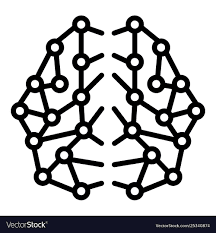
Deep learning has quietly become the engine behind the most consequential AI systems in production today — from the models that transcribe your voice, detect tumors in medical scans, and generate coherent text at scale. Yet the term is frequently misused, conflated with machine learning broadly, or reduced to marketing shorthand. Understanding what deep learning actually is, how artificial neural networks function, and where the boundaries of the technology lie is increasingly necessary for anyone working in or around the technology industry.
What Is Deep Learning?
Deep learning is a subfield of machine learning that uses artificial neural networks with multiple layers — hence “deep” — to learn representations of data. Rather than relying on hand-engineered features, deep learning models learn hierarchical representations directly from raw input. A model processing images, for example, might learn edges in early layers, shapes in middle layers, and recognizable objects in later layers, all without a human explicitly programming those distinctions.
The “depth” refers to the number of layers between input and output. Shallow networks might have one or two hidden layers. Modern deep learning architectures — such as transformers used in large language models — can have dozens or hundreds of layers, with billions of parameters trained across massive datasets.
How Artificial Neural Networks Work
An artificial neural network (ANN) is a computational system loosely inspired by the structure of biological brains. It consists of nodes, or neurons, organized into layers: an input layer, one or more hidden layers, and an output layer. Each connection between neurons carries a weight — a numerical value that determines how strongly one neuron influences another.
Forward Propagation
During training, data enters the network through the input layer and passes forward through each subsequent layer. At each neuron, inputs are multiplied by their corresponding weights, summed together, and passed through an activation function — a mathematical operation that introduces non-linearity into the model. Without activation functions, no matter how many layers a network has, it would behave like a single linear transformation and fail to capture complex patterns.
Common activation functions include ReLU (Rectified Linear Unit), sigmoid, and tanh. ReLU, which simply outputs zero for negative inputs and the value itself for positive inputs, has become the default in most modern architectures due to its computational efficiency and reduced susceptibility to the vanishing gradient problem.
Backpropagation and Gradient Descent
After a forward pass, the network’s output is compared against the known correct answer using a loss function — a measure of how wrong the prediction was. The training process then works backward through the network, calculating how much each weight contributed to the error. This process is called backpropagation. The weights are then adjusted using an optimization algorithm, most commonly a variant of gradient descent, to reduce the loss on the next iteration.
This cycle — forward pass, loss calculation, backpropagation, weight update — repeats across thousands or millions of training examples. Over time, the network’s weights converge toward values that allow it to make accurate predictions on new, unseen data.
Key Architectures in Deep Learning
Not all neural networks are structured the same way. Different architectures have been developed to handle different types of data and tasks.
Convolutional Neural Networks (CNNs)
CNNs are designed for grid-structured data, most commonly images. Rather than connecting every neuron to every other neuron, convolutional layers apply learned filters across local regions of the input, preserving spatial relationships. This makes CNNs highly effective for image classification, object detection, and video analysis. They remain the dominant architecture for computer vision tasks.
Recurrent Neural Networks (RNNs)
RNNs process sequential data by maintaining a hidden state that carries information from previous steps in the sequence. This makes them suitable for time-series data, speech, and natural language. However, standard RNNs struggle with long-range dependencies — a problem partially addressed by Long Short-Term Memory (LSTM) networks, which use gating mechanisms to control what information is retained or discarded across long sequences.
Transformers
Introduced in the 2017 paper Attention Is All You Need by Vaswani et al., the transformer architecture has largely displaced RNNs for natural language processing tasks. Transformers rely on a mechanism called self-attention, which allows the model to weigh the relevance of every position in a sequence against every other position simultaneously — enabling far more parallelizable training and better capture of long-range dependencies. Transformer-based models, including BERT and the GPT series, now underpin the majority of large language models in commercial deployment.
Training Requirements and Practical Constraints
Deep learning models are data-hungry and computationally expensive. Training a large neural network requires substantial labeled datasets — often millions of examples — as well as significant GPU or TPU compute resources. This has concentrated frontier deep learning research among well-resourced organizations, though techniques like transfer learning have made it possible to fine-tune pre-trained models on smaller datasets at far lower cost.
Overfitting — where a model performs well on training data but poorly on new data — remains a persistent challenge. Regularization techniques such as dropout, weight decay, and data augmentation are routinely applied to improve generalization. Batch normalization, which normalizes the inputs to each layer during training, has also become a standard component of modern deep learning pipelines for its ability to stabilize and accelerate training.
Why This Matters
Deep learning is not simply an academic curiosity — it is the technical foundation for a growing proportion of commercial AI products and automated decision systems. Understanding how these models are built, what their architectural assumptions are, and where they are likely to fail is essential context for evaluating AI claims in the market. A model that performs well on benchmark datasets may still be brittle under distribution shift, adversarial inputs, or underrepresented demographics in training data.
The field is also moving rapidly. The transformer architecture is now being applied beyond language to images, audio, and multimodal tasks. Research into more efficient training methods, smaller parameter counts with comparable performance, and interpretability tools is ongoing. For anyone building on top of these systems — whether as a developer, investor, or enterprise buyer — a working understanding of the underlying mechanics is increasingly a baseline competency rather than a specialization.
Key Takeaways
- Deep learning derives its power from layered representation learning: Models automatically learn hierarchical features from raw data rather than relying on manually engineered inputs, which is the core reason they outperform classical machine learning on high-dimensional data like images, audio, and text.
- Backpropagation and gradient descent are the core training mechanisms: Understanding this loop — forward pass, loss calculation, weight update — is foundational to evaluating why models succeed or fail during training.
- Architecture choice is task-specific: CNNs, RNNs, LSTMs, and transformers each carry different structural assumptions suited to different data types; no single architecture is universally optimal.
- Transformers now dominate language and are expanding into other modalities: The 2017 self-attention mechanism has reshaped the field and continues to drive state-of-the-art results across NLP, vision, and multimodal systems.
- Practical deployment requires more than a trained model: Generalization, computational cost, data quality, and failure mode analysis are engineering and business concerns that matter at least as much as benchmark accuracy.












